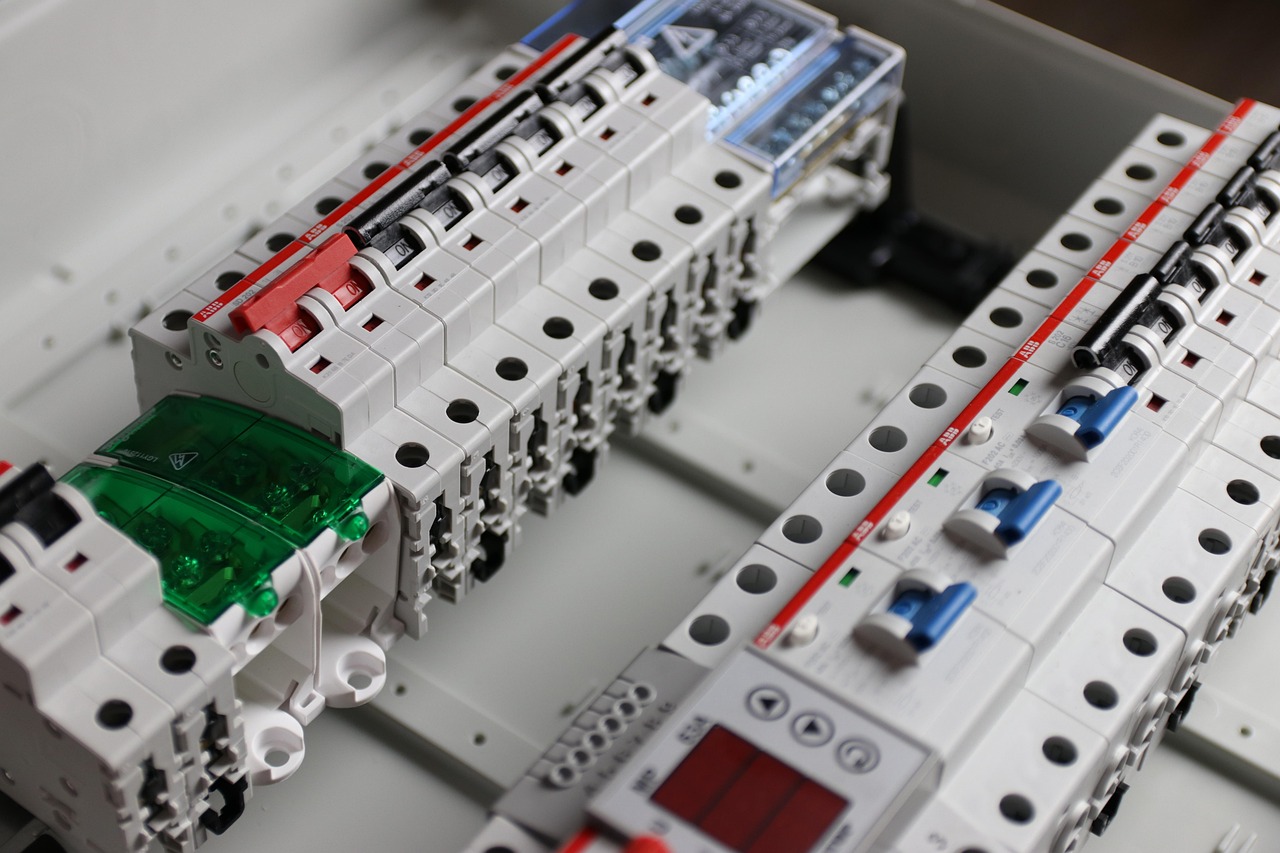
The call comes in while you're mid-panel
You're inside a breaker panel, both hands committed, and the phone in your truck starts buzzing. You can't just wave a hand at it. If you're doing this job right, you're not supposed to stop mid-task at all — not for a phone, not for anything, until the work in front of you is in a safe condition.
That's the real story behind the search that brought you here: a contractor's phone rings while he's on the job, and there's a real, physical, sometimes legal reason he can't answer it.
What a contractor's phone rings into while he's on the job
Electrical work has rules about this, and they're not suggestions. NFPA 70E Section 130.2(A) says that conductors and circuit parts at 50 volts or more have to be put into an electrically safe work condition before you work within the limited approach boundary — unless de-energizing creates a bigger hazard or the task genuinely can't be done that way [4]. Sections 130.4(F), (G), and 130.7(E) are what determine the shock and arc-flash boundaries that decide whether you even need an energized work permit to be in there at all [3]. OSHA's lockout/tagout rule, 29 CFR 1910.147(a)(1)(ii)(D), backs the same idea from a different angle [5].
None of that leaves room for "hang on, let me grab this." You lock out, you verify, you work. The phone rings into an empty truck cab, and it stays there until you're done — which might be twenty minutes, might be two hours.
The regulatory ground under this keeps getting firmer, not softer. Delaware became the first state to formally write NFPA 70E into law by reference, effective January 1, 2026 [2]. That's a signal, not an isolated event — the industry is moving toward treating these boundaries as non-negotiable, which means less room for "I'll just answer real quick" than there used to be.
What the missed call actually costs
Here's where it gets expensive, and none of it is about you doing anything wrong.
Of people whose call goes unanswered, 42% leave a voicemail — which means the other 58% just hang up and move on [7]. Say you're in three panels a day, phone off to the side each time, and you miss even a handful of calls in a week. Most of those callers never told you they called at all.
Of the ones who do reach your voicemail, the numbers don't get friendlier. In a 2025 survey of 1,000 US consumers, 78% said they've abandoned a business over an unanswered call, and 82% said they'd call a competitor instead [6]. Some will also try chat instead of calling back — 24% said that's their move [7]. Either way, the job doesn't wait for you to resurface and check messages between panels.
Run the plain math: if ten calls come in on a job-heavy day and even three land while you're mid-task, most of the three don't leave a message, and most of the ones who do have already started dialing the next name on the list before you get back to your phone.
Why this hits electricians harder than most trades
There are roughly 821,000 electrician jobs in the country, and the field is expected to grow about 9% over the next decade, with about 72,700 openings a year on average [1]. The median wage sits at $63,190 a year [1]. That's a lot of skilled people, a lot of demand, and a lot of competition for the same homeowner who's calling around.
That homeowner doesn't know or care that you were locked out and de-energized for a legitimate safety reason. They just know the call didn't get answered, and there's another electrician's number one search away.
The irony is that the exact thing that makes you good at the job — following the safe work procedure instead of cutting corners for a ringing phone — is the thing that makes you look unreachable to the person trying to hire you.
What fixing this actually looks like
This isn't about answering faster while your hands are still in the panel. It's about someone or something picking up on the first or second ring, taking down what the caller needs, and getting that information to you the moment you're clear — so the caller never has to decide whether to leave a voicemail or try the next name on the list.
For a one-person or small crew operation, that usually means the call goes somewhere other than a truck cab, gets handled like a real business call, and lands back on your desk as a lead instead of a missed-call notification. See how it works if you want the mechanics, or look at what this looks like specifically for electrical service calls.
If you run an electrical company and want to hear how this answers your phone while you're inside a panel with both hands full, the call is twenty minutes.